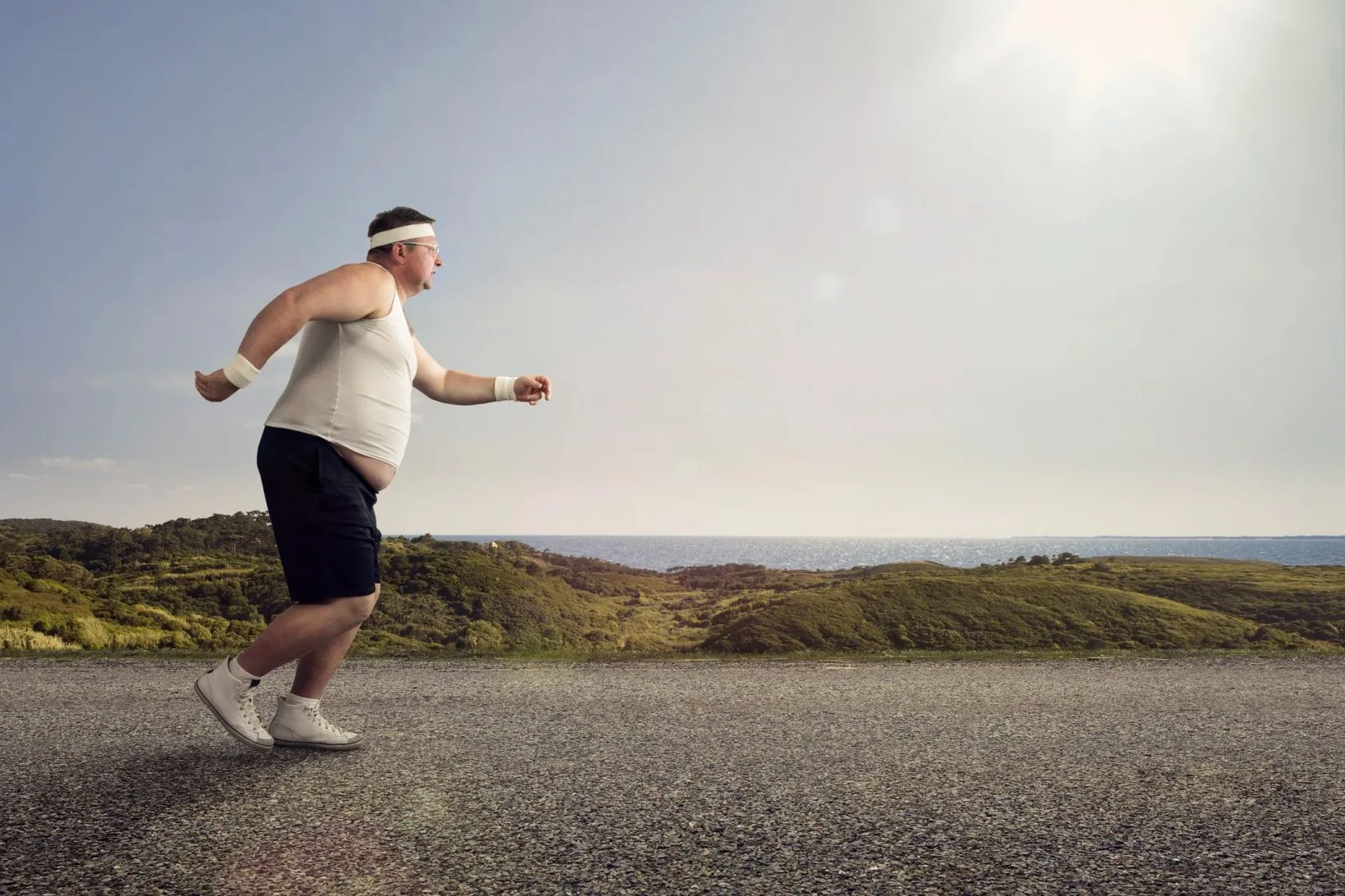
You have made real progress. But those final pounds are not budging no matter what you do. This is not a motivation problem. It is a biology problem, and it has a real explanation.
You started strong. The first weeks felt almost easy. The scale moved, your clothes fit differently, and you finally felt like you had figured it out. Then somewhere along the way the progress slowed. And then it stopped.
Those last ten pounds have become the most stubborn thing you have ever dealt with. You have not changed what you are doing. If anything, you are working harder than you were at the start. But the number on the scale will not move.
This is one of the most common and most frustrating experiences in weight loss. It also has a very clear biological explanation that has nothing to do with effort or commitment.
Your Body Defends Its Weight More Aggressively the Closer You Get to Your Goal
This sounds counterintuitive. You would think that the less weight you have to lose, the easier it would be to lose it. But the opposite is true, and the reason comes down to how your body interprets the situation.
As you lose weight, your body begins to treat the remaining fat reserves as increasingly important to protect. The smaller those reserves become, the more aggressively your body works to hold onto them. Hunger hormones increase. Your metabolism slows further. Your body becomes more efficient at extracting energy from whatever you eat. All of these adaptations are working in the same direction, making it harder to create the calorie deficit needed to keep losing.
Research has found that as people approach their goal weight, the body's hormonal response to further fat loss intensifies. Ghrelin levels rise more sharply, leptin levels drop more significantly, and the metabolic adaptation becomes more pronounced. The last pounds are not just psychologically harder. They are biologically harder.
Why the Same Approach Stops Working
The strategy that got you from your starting weight to where you are now was designed for a different version of your body. Your current body has adapted to everything you have been doing. It has recalibrated around your calorie intake, your exercise routine, and your eating patterns. What worked before is no longer creating the conditions your body needs to continue losing fat.
This is not a sign that you have hit a permanent ceiling. It is a sign that the approach needs to evolve. The body that is ten pounds from its goal requires a different set of inputs than the body that was thirty pounds away from it.
The Specific Reasons Those Last Pounds Hold On
Several factors combine to make the final stage of weight loss significantly harder than the earlier stages. Understanding them makes it easier to address them directly rather than simply pushing harder on a strategy that has stopped producing results.
Your calorie deficit has effectively disappeared. As your body weight drops, your total daily calorie burn decreases. The deficit you had at the start of your program has shrunk or closed entirely, even if you are eating the same amount. You are no longer in a meaningful deficit because your body has adjusted to match your intake.
Your hunger signals are working against you more than ever. The hormonal drive to eat increases as body fat decreases. At this stage many people find themselves dealing with hunger and cravings that feel more intense than anything they experienced earlier in the process. This is not imagination. It is a measurable physiological response that makes sticking to a reduced calorie intake genuinely harder.
Your body is protecting certain fat stores specifically. The body does not lose fat evenly from all areas. As overall fat mass decreases, stubborn areas like the abdomen, hips, and thighs become disproportionately resistant to further reduction. These areas have a higher concentration of receptors that respond to fat storage signals, making them the last to release stored fat even under significant calorie restriction.
Muscle loss has reduced your metabolic rate. If previous weight loss included significant muscle loss alongside fat, your resting metabolic rate is lower than it should be for your current size. This makes maintaining a calorie deficit harder and means your body burns fewer calories than expected for someone at your weight.
What Actually Moves the Needle at This Stage
Getting past a late-stage plateau requires a different strategy than the one that got you here. The most effective approaches at this stage include:
- Recalculating your actual calorie needs based on your current body weight and metabolic rate rather than the numbers that applied when you started
- Shifting the focus to body composition rather than scale weight, prioritizing muscle preservation and fat loss specifically rather than overall weight reduction
- Increasing protein intake to protect lean muscle, support satiety, and boost the thermic effect of food
- Addressing hormonal factors that may be making the final stage of fat loss harder than it should be, including insulin resistance or cortisol elevation from dieting stress
- Considering medical support for the biological resistance that builds up as the body approaches its defended weight range
- Exploring targeted body contouring options for stubborn fat areas that are not responding to continued weight loss efforts
When Diet and Exercise Are Not Enough for Stubborn Areas
For many people the last ten pounds are not evenly distributed. They are concentrated in specific areas that simply do not respond to further calorie restriction or exercise, regardless of how consistent the effort is. This is where targeted body contouring becomes a meaningful option.
At Doctor's Weight Loss and Aesthetics of Wisconsin in Wausau, we offer LipoDissolve, a non-surgical treatment that dissolves stubborn fat and contours the body with precision in areas that weight loss alone cannot fully address. We also offer EMS and RF body sculpting technology to target, tone, and shape specific areas of the body. These tools are designed to complement your weight loss progress and help you reach the aesthetic result you have been working toward.
For patients who need additional support with the biological resistance to further fat loss, we also prescribe doctor-supervised weight loss medications, including GLP-1, Combination of GLP-1 and GIP, and Retatrutide, the medications behind Ozempic, Wegovy, Mounjaro, and Zepbound. We can prescribe and ship to patients anywhere in Wisconsin.
You Are Closer Than It Feels
The last ten pounds feel disproportionately hard because they genuinely are disproportionately hard. But hard does not mean impossible. It means the approach needs to match what is actually happening in your body at this stage rather than continuing with what worked earlier.
With the right combination of nutritional strategy, medical support where appropriate, and targeted body contouring for stubborn areas, the finish line that has felt just out of reach becomes significantly more achievable.
You have done the hard work to get here. The right support can take you the rest of the way.
Stuck on those last few pounds? Let us help.
Your consultation at Doctor's Weight Loss and Aesthetics of Wisconsin is a focused conversation about where you are now and what a plan built around your current situation looks like. We serve patients in Wausau and anywhere in Wisconsin.